How to Select the Right Pneumatic Actuator for Ball Valves
How to Select the Right Pneumatic Actuator for Ball Valves
In industrial automation systems, ball valves and pneumatic actuators are typically supplied and operated as an integrated control unit.
A proper actuator selection directly affects valve reliability, service life, and overall system safety.
From the perspective of engineering companies, system integrators, and end users, choosing the right pneumatic actuator is not only about physical compatibility, but about long-term stable operation, process suitability, and ease of maintenance. The following key factors are essential in real-world applications.
1. Determine the Required Valve Torque
The first step in actuator selection is identifying the actual operating torque of the ball valve under working conditions.
In addition to the nominal valve torque, the following factors should be considered:
-
Media pressure and temperature
-
Sealing material
-
Operating frequency
-
Potential sticking or fouling during long idle periods
In practice, it is recommended to select an actuator with 20%–30% safety margin above the calculated torque to ensure reliable operation under variable conditions.
2. Double-Acting or Spring-Return Actuator?
Different applications require different actuator structures:
-
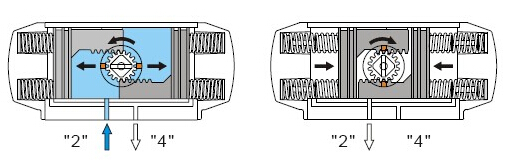
Double-acting pneumatic actuators
Suitable for systems with stable air supply and no specific fail-safe requirements. They offer a simple structure and cost-effective operation. -
Spring-return (single-acting) pneumatic actuators
Commonly used in safety-critical applications such as oil & gas, chemical processing, or key process pipelines. The valve automatically returns to a preset position in case of air failure.
Selection should be based on process safety requirements, project specifications, and internal standards.
3. Mounting Interface and Standard Compatibility
To ensure secure and reliable installation, the following interface standards should be confirmed:
-
Valve-to-actuator mounting flange (e.g. ISO 5211)
-
Actuator output shaft type (square, keyed, etc.)
-
NAMUR compliance for mounting solenoid valves, limit switches, and other accessories
Standardized interfaces simplify installation and reduce maintenance and replacement costs.
4. Environmental and Operating Conditions
Pneumatic actuators often operate in challenging environments. Important considerations include:
-
Ambient temperature (high or low)
-
Indoor or outdoor installation
-
Humidity, dust, or corrosive atmospheres
Appropriate surface treatment, sealing design, and protection class selection help ensure long-term performance and durability.
5. Future Automation and Control Expansion
In many projects, ball valves may initially require simple on/off control, but later upgrades may include:
-
Remote control or feedback signals
Allowing for these options during the initial selection stage can significantly reduce future modification costs.
Conclusion
Selecting the right pneumatic actuator for a ball valve involves a comprehensive evaluation of torque requirements, safety considerations, standard compatibility, environmental conditions, and system scalability.
A well-matched actuator improves system reliability and reduces long-term operating and maintenance costs.
For practical projects, it is recommended to define operating conditions clearly and work with experienced valve and actuator manufacturers to achieve the most suitable solution for the application.